


Fox Eye Lift: Day-by-Day Recovery (Days 1–7) & Early Aftercare
The first week after a Fox Eye Lift is the most important stage of recovery. During days 1–7, patients often notice swelling, bruising, and tightness around the eyes, which gradually improve with proper care. Knowing what to expect day by day helps you feel more comfortable and confident throughout healing. This guide explains the Fox Eye Lift recovery timeline for the first week and shares essential aftercare tips to support faster results and reduce discomfort.
Fox Eye Lift Day 1–3: Rest, Cold Compress & Head Elevation
The first 72 hours after a Fox Eye Lift are all about rest, calm, and controlling swelling. Keep your head elevated, even while sleeping, to reduce fluid buildup. Apply cold compresses gently on and off throughout the day, following your surgeon’s instructions. Cold therapy helps minimize swelling and bruising around the outer eye and temple area. Avoid putting pressure on the surgical site, and make sure any dressings stay clean and dry unless your doctor advises otherwise.
During this period, you may feel mild pain, tightness, or discomfort around the brow, temple, or eye corner. Take pain medication exactly as prescribed by your surgeon and avoid using blood thinners unless your doctor has cleared them. Some clinics recommend light indoor walking to support circulation, but it’s important to avoid bending, heavy lifting, or exercise during these early days.
If your surgeon has prescribed an eye ointment or drops, use them as directed. These keep the eye surface protected and help the incision area stay moist for proper healing. If your eyes feel dry, itchy, or sandy, artificial tears can provide relief—but always wash your hands before use and avoid rubbing your eyes.
Fox Eye Lift Day 4–7: Follow-Up, Suture Removal & Light Routine
Many patients have a follow-up appointment around day 5–7 after a Fox Eye Lift. During this visit, external sutures are often removed. The process is quick, and most people experience only mild discomfort. Once sutures are out, makeup may be allowed to cover any remaining bruising—but only apply it if your surgeon confirms it is safe for your healing incisions.
Limited screen time is generally fine at this stage, as long as your eyes feel comfortable. Remember to take breaks, blink often, and use lubricating eye drops if you notice dryness. Continue avoiding heavy lifting or strenuous activity. If you feel unusual pulling, burning, or notice new redness, rest and contact your clinic for guidance.
Fox Eye Lift Driving & Desk Work in Week 1: What’s Reasonable?
Driving after a Fox Eye Lift requires clear vision, quick reflexes, and being completely free of sedating pain medications. Many surgeons permit short, local driving only once you are off prescription pain medicine and feel fully alert—but always confirm with your surgeon before getting behind the wheel.
For desk work, some patients return within about a week, especially after endoscopic brow or temporal lift components, provided swelling has improved and they feel comfortable. It’s best to start with a lighter schedule and ease back into full workdays.
If your job involves long hours, bright lighting, or frequent public interaction, waiting a bit longer may be beneficial. Makeup can sometimes help camouflage bruising once your surgeon gives approval, but the most important thing is to follow your body’s signals and your medical team’s advice.
Fox Eye Lift Early Makeup & Contact Lenses: Minimum Waits
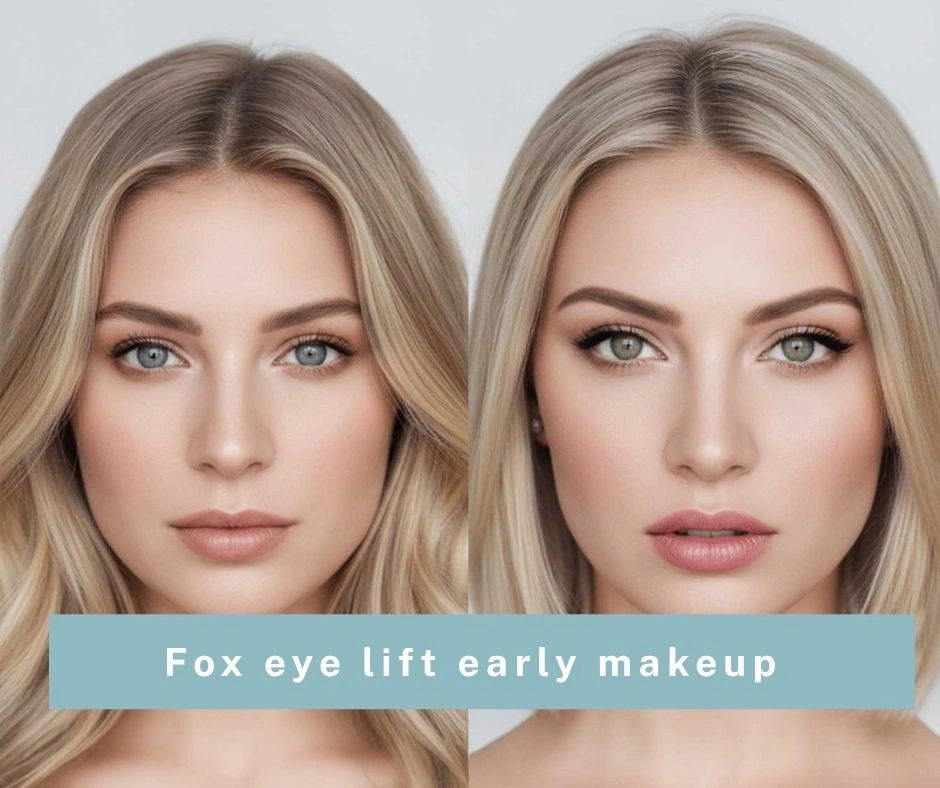
Makeup can carry bacteria and may irritate fresh incisions, so it should be avoided in the first days after a Fox Eye Lift. Many post-op guidelines allow gentle cosmetic use around week 1–2, once sutures are removed and the skin has fully closed. To reduce infection risk, start with freshly cleaned brushes and, ideally, new products.
For contact lenses, most surgeons recommend waiting about 1–2 weeks, depending on the incision location and how your eyes feel. Always confirm the right timing with your surgeon during your follow-up visit. If you experience dryness or a foreign-body sensation while wearing lenses, remove them immediately and switch to glasses. Keep artificial tears available, especially during screen use or when spending time in air-conditioned environments.
Fox Eye Lift “What’s Normal” in Week 1
During the first week after a Fox Eye Lift, it’s normal to experience swelling, bruising, tearing, light sensitivity, and a sense of tightness around the eyes. These symptoms should gradually improve day by day. After suture removal, small “whiteheads” may appear near the stitch sites; these are minor and can be easily treated during routine check-ups at your clinic. Gentle walking is usually safe, but avoid any activity that raises blood pressure in the face.
Sleeping with your head elevated and using cold compresses as directed often brings the greatest relief. To support healing, avoid smoking, vaping, alcohol, and high-sodium foods, since they can increase swelling and slow recovery.
Fox Eye Lift Red Flags in Week 1: When to Call Your Surgeon
Contact your surgeon immediately if you experience any concerning symptoms after a Fox Eye Lift. Warning signs include sudden or worsening swelling, bleeding that does not stop with gentle pressure, sharp or increasing pain, fever, pus-like discharge, sudden vision changes, or visible lid malposition (such as the outer corner of the eye pulling downward or outward). Early medical review is essential to protect both your vision and your surgical results.
If something doesn’t feel right, don’t wait until your next scheduled appointment. Call your clinic right away—and if they allow it, send a photo of the issue for faster guidance. It’s always better to ask than to risk complications.
Fox Eye Lift Simple Aftercare Checklist (Days 1–7)
- Keep your head elevated at all times, even while sleeping. Use extra pillows or a wedge to maintain this position.
- Apply cold compresses during the first 48–72 hours as instructed by your surgeon. Never place ice directly on the skin.
- Use prescribed ointments or eye drops exactly as directed, and avoid rubbing your eyes.
- Take only short indoor walks to keep circulation moving. Avoid bending, heavy lifting, or any form of exercise.
- Keep incisions clean and dry, and follow your clinic’s cleaning routine carefully.
- Attend your follow-up appointment around day 5–7 for a suture check or removal, unless your surgeon gives different instructions.
- Ask your surgeon before using makeup or contact lenses. Most patients wait 1–2 weeks before resuming them safely.
- Avoid smoking, alcohol, and high-sodium foods during the first week, as they can worsen swelling and slow healing.
Fox Eye Lift FAQ (Days 1–7)
Fox Eye Lift when are stitches removed?
Many surgeons remove external stitches around day 5–7, depending on technique and healing. Your surgeon will confirm the exact day for you.
Fox Eye Lift when can I drive again?
After you’ve stopped prescription pain meds and feel fully alert—and only with surgeon approval. Start with short, daytime trips.
Fox Eye Lift when can I go back to work?
Some people return to desk work at about one week, especially after endoscopic brow/temporal components, but this is individual. Plan a light schedule at first.
Fox Eye Lift when can I use makeup or wear lenses?
Makeup is often allowed after your incisions seal and stitches are out (around 1–2 weeks for many patients). Lenses are commonly delayed to about 1–2 weeks. Always ask at your check-up.
Fox Eye Lift what warning signs should I watch for?
New or fast swelling, bleeding that won’t stop, strong or increasing pain, fever, pus-like discharge, vision changes, or a clearly “pulled” outer corner. Call your surgeon.
Fox Eye Lift Final Notes (Safety First)
Every recovery is unique. This day-by-day guide is a general map, not a strict rule. Your surgeon’s plan always comes first, because they know your exact technique (for example, canthoplasty vs canthopexy plus endoscopic temporal lift), your health, and the details of your surgery. If you have any doubts—ask. It protects both your comfort and your final result.