


Fox Eye Lift: Week-by-Week Recovery (Weeks 2–6) & Month 2–3+ Guide
Recovery after a Fox Eye Lift doesn’t stop in the first week. From week 2 to week 6, patients usually see swelling and bruising fade, stitches heal, and daily activities slowly return to normal. By months 2–3, results begin to look more refined, with the eye and brow area settling into its new contour. This guide explains the Fox Eye Lift recovery week by week and offers aftercare tips to help you heal smoothly and enjoy long-lasting results.
Fox Eye Lift Week 2–3: Social Return, Office Work & Light Cardio
By week 2 after a Fox Eye Lift, most patients notice that swelling and bruising have decreased significantly. Daily activities can usually be resumed at a slow and comfortable pace, and many people are able to return to office work during this period if their surgeon is satisfied with healing progress. It’s best to plan shorter workdays at first, take regular breaks, and keep lubricating drops nearby to ease screen-related dryness. Although this stage feels like a major improvement, remember that deeper healing is still taking place beneath the skin.
One of the most common questions at this point is about exercise. In weeks 2–3, light cardio such as gentle walking or relaxed cycling is often permitted if your surgeon approves. Keep the intensity low and avoid heavy lifting or strenuous workouts. Think of activity as a ladder—if swelling worsens or the eye area feels sore, step back and rest. Always follow your surgeon’s specific plan.
Makeup and contact lenses can usually be reintroduced during weeks 2–3, provided the incisions are sealed and comfortable. To reduce infection risk, use freshly cleaned brushes and new products, and stop immediately if irritation or dryness develops. If in doubt, take a break from cosmetics and switch to glasses until your eyes feel fully ready.
Fox Eye Lift Week 4–6: Exercise Ladder, Heavier Workloads & Travel (Flights)
By weeks 4–6 after a Fox Eye Lift, most patients feel more confident and notice a steady return to normal routines. Exercise can usually progress from light to moderate intensity, and with surgeon approval, strength training may be added gradually. Pay attention to any swelling, tightness, or fatigue, and increase activity slowly over several sessions instead of all at once. Keep in mind that recovery speed often depends on the surgical technique used—such as canthoplasty, canthopexy, or an endoscopic temporal lift. Patients who have combined procedures may need a slower, more cautious return to activity.
Travel, particularly flights, is another common question during this stage. While some oculoplastic specialists allow short-haul travel as early as 1–2 weeks post-op, many surgeons prefer waiting at least two weeks to reduce risks of swelling and dryness in flight. If you do fly, stay well hydrated, use lubricating eye drops, and avoid lifting heavy luggage. Always confirm the timing of travel with your own surgeon, as recommendations vary depending on the procedure mix and your personal healing.
In the workplace, most people can handle longer schedules by weeks 4–6. If your job involves public interaction under bright lights—such as retail, hospitality, or broadcasting—consider using softer lighting, taking short breaks, and wearing sunglasses outdoors. For physically demanding roles, discuss a graded return-to-work plan with your surgeon to protect your results.
Fox Eye Lift Month 2–3+: Scar Care, Symmetry & “Photo-Ready” Moments
By months 2–3 after a Fox Eye Lift, most residual swelling and minor asymmetry gradually fade. Incision lines soften, and small bumps or irregularities smooth out over time. Many patients feel “photo-ready” during this stage, although healing and tissue refinement will continue for several more months. If your procedure included an endoscopic brow or temporal lift, the tiny hairline incisions usually blend well with natural hair growth—but it’s essential to continue sun protection to support scar healing.
Consistent scar care makes a big difference. This includes gentle cleansing, using any ointments or silicone-based products recommended by your surgeon, and protecting the area from UV exposure with sunscreen and hats. Avoid picking or peeling dry skin. If you notice a persistent “track mark” or raised spot at a former suture site, ask your clinic about available treatment options during your follow-up visit.
Fox Eye Lift Longevity & Small Adjustments (“Tweakments”)
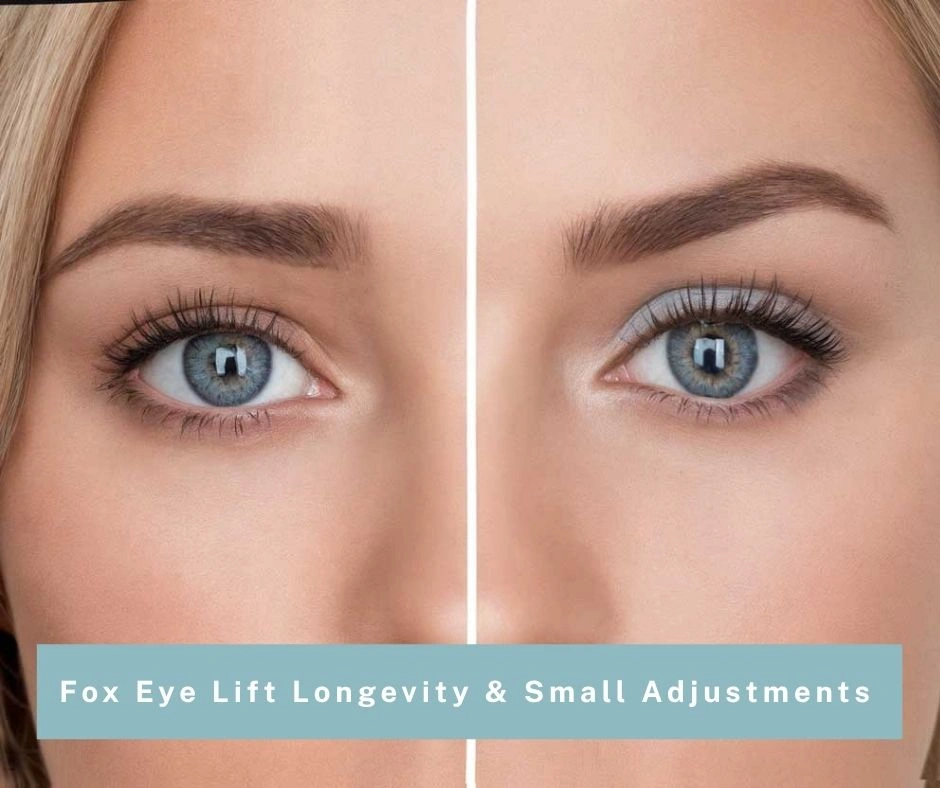
Fox Eye Lift results are designed to be long-lasting, as surgery strengthens the support at the lateral canthus and lifts the temporal or brow tissues. However, natural aging continues, and some patients may consider minor touch-ups in the future. Your surgeon will discuss these possibilities during routine follow-up visits. If your procedure involved a soft-tissue approach, such as canthopexy rather than canthoplasty, your long-term maintenance plan may differ from someone who underwent a more structural tightening.
Fox Eye Lift Safety Beyond Week 2: What’s Normal vs Not
It’s common to feel mild tightness, slight numbness, or a gentle “pulling” sensation in the temple or outer eye area for several weeks after a Fox Eye Lift. These symptoms usually improve gradually as healing continues. What is not normal, however, is increasing pain, sudden or rapid swelling, vision changes, pus-like discharge, or obvious lid malposition (such as the outer corner being pulled downward or outward). These warning signs require prompt medical attention to protect both your comfort and your surgical results.
If you are ever uncertain about a symptom during Fox Eye Lift recovery, contact your clinic without delay. Sending a message or photo—if your clinic allows—can provide quick reassurance or guidance. Otherwise, arrange a short in-person check. Seeking early help is always safer than waiting, especially after canthal surgery, where proper eye alignment is essential for both comfort and long-term safety.
Fox Eye Lift Makeup, Lenses & Skincare After Week 2 (Quick Reminders)
- Makeup: Reintroduce makeup gradually after a Fox Eye Lift, avoiding direct pressure on or near the incision lines. Use gentle makeup removers without scrubbing, and switch products if you notice redness, burning, or stinging.
- Contact lenses: If you experience dryness or a foreign-body sensation, remove your lenses and switch to glasses until your eyes feel more comfortable. Keep sterile saline or lubricating drops available, especially during flights or extended screen use.
- Skincare: Avoid retinoids, chemical exfoliants, or acids near healing incisions until your surgeon gives approval. Daily sunscreen use is essential to protect the delicate skin and support scar healing.
Fox Eye Lift Exercise Ladder (Practical Template)
- Week 2: Walking on level ground; gentle stationary bike; no heavy lifting; keep heart rate moderate.
- Week 3: Add longer light cardio if swelling is calm; stop if throbbing or tightness increases.
- Week 4: Introduce moderate workouts; avoid straining the brow/temple area; keep form strict.
- Weeks 5–6: Gradual return to strength training; lift less than usual at first; space rest days.
Your exact ladder may be faster or slower—follow your surgeon’s rules above all.
Fox Eye Lift Flight Tips (If Your Surgeon Clears Travel)
- Timing: Many surgeons recommend waiting about two weeks before flying after a Fox Eye Lift, though some may allow short flights earlier depending on your healing. Always follow your surgeon’s specific advice.
- Hydration & lubrication: Stay well-hydrated, use lubricating eye drops, and for long-haul flights consider a small humidifying mask to reduce dryness.
- Movement: Walk the aisle when it’s safe, gently flex your ankles, and avoid lifting heavy carry-on bags to minimize strain.
- Sun & light: Protect your eyes from brightness and wind by wearing sunglasses upon arrival. A wide-brimmed hat or sunscreen also helps shield healing skin from UV exposure.
Fox Eye Lift FAQ (Weeks 2–6 & Month 2–3+)
This fox eye lift recovery guide is a general map for weeks 2–6 and months 2–3+. Every plan is individual, based on your technique (for example, canthoplasty vs canthopexy plus endoscopic brow/temporal lift) and your health. When timelines disagree, your surgeon’s instructions always win. If you are unsure about exercise, flights, makeup, or lenses—send a message or book a quick review. Staying cautious protects your comfort, your vision, and your long-term results.
Fox Eye Lift when can I resume full workouts?
Most patients climb from light activity at weeks 2–3 to moderate workouts by weeks 3–4, with heavier strength work around weeks 5–6—only if your surgeon approves and swelling is stable.
Fox Eye Lift when is it okay to fly?
Guidance varies by surgeon and procedure mix. Many allow flying around two weeks after eyelid or brow procedures; some centers permit earlier or prefer longer. Always follow your own surgeon’s plan.
Fox Eye Lift how long until I look “photo-ready”?
A lot of people feel comfortable in public by weeks 3–4. Finer refinement of swelling and incision lines continues into months 2–3+.
Fox Eye Lift what symptoms are not normal after week 2?
Worsening pain, new swelling, vision changes, pus-like drainage, or a clearly “pulled down” outer corner—these need quick review.
Fox Eye Lift Final Safety Note
This fox eye lift recovery guide is a general map for weeks 2–6 and months 2–3+. Every plan is individual, based on your technique (for example, canthoplasty vs canthopexy plus endoscopic brow/temporal lift) and your health. When timelines disagree, your surgeon’s instructions always win. If you are unsure about exercise, flights, makeup, or lenses—send a message or book a quick review. Staying cautious protects your comfort, your vision, and your long-term results.